Understanding threats
Lifecycle
When does which risk arise?
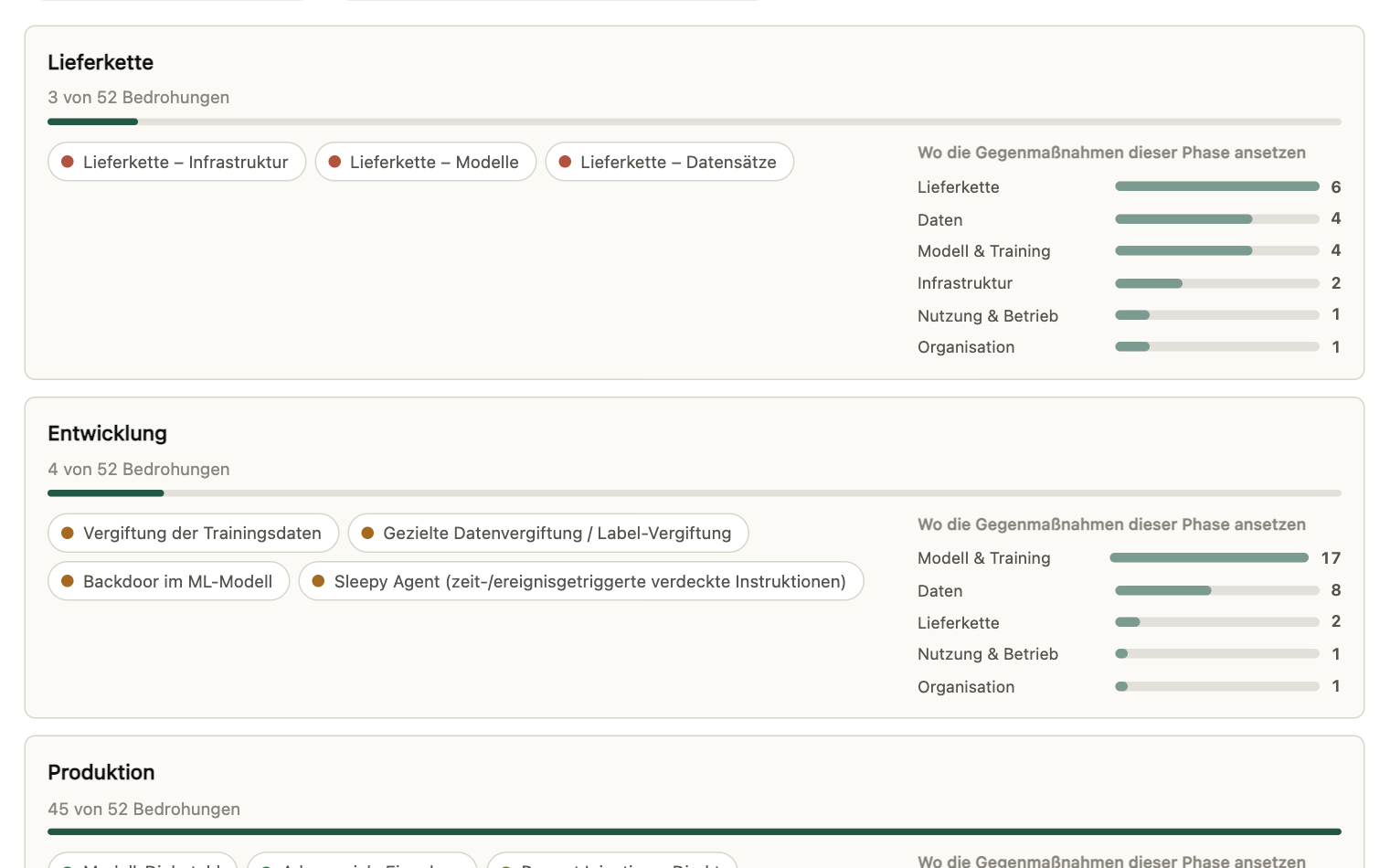
Assigns every threat to the phase in which it arises and sets beside it the levels at which the mitigations of the same phase take effect.
52 threats 3 phases
↑ ↓ selectEnter openEsc closeCovers the knowledge base, role pages and product pages
Ten analyses of the same threat catalogue, each on its own page and each with its own question: how a threat unfolds, which threats match your own system, where mitigations take effect and what a framework does not reach. All of them work exclusively with the verified catalogue data and can be exported as SVG.
Understanding threats
When does which risk arise?
Assigns every threat to the phase in which it arises and sets beside it the levels at which the mitigations of the same phase take effect.
52 threats 3 phases
Understanding threats
Where does the line between two run?
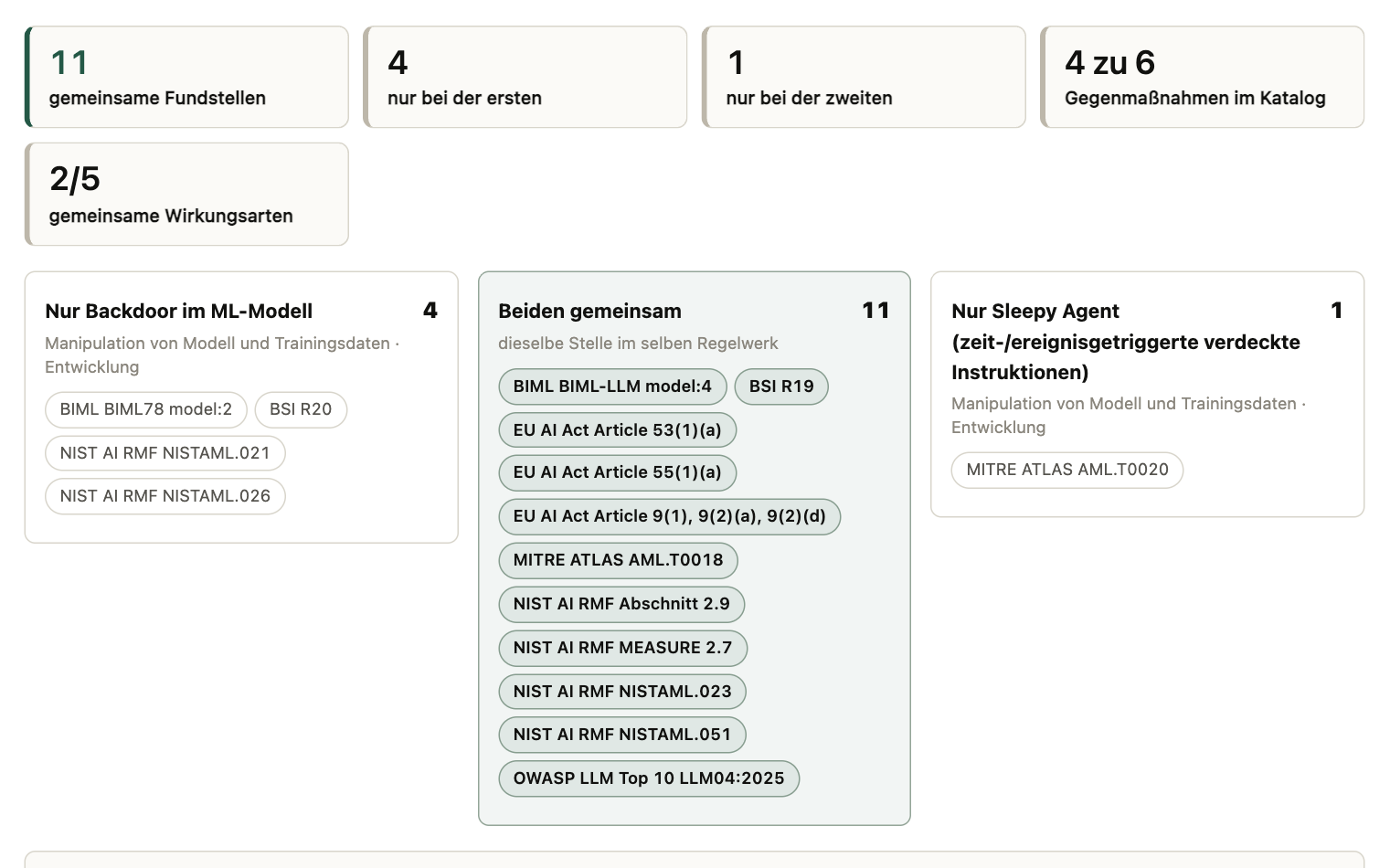
Places two threats side by side and separates the shared references from those that apply to only one of them.
52 threats pairs with overlap
Understanding threats
How does harm arise?
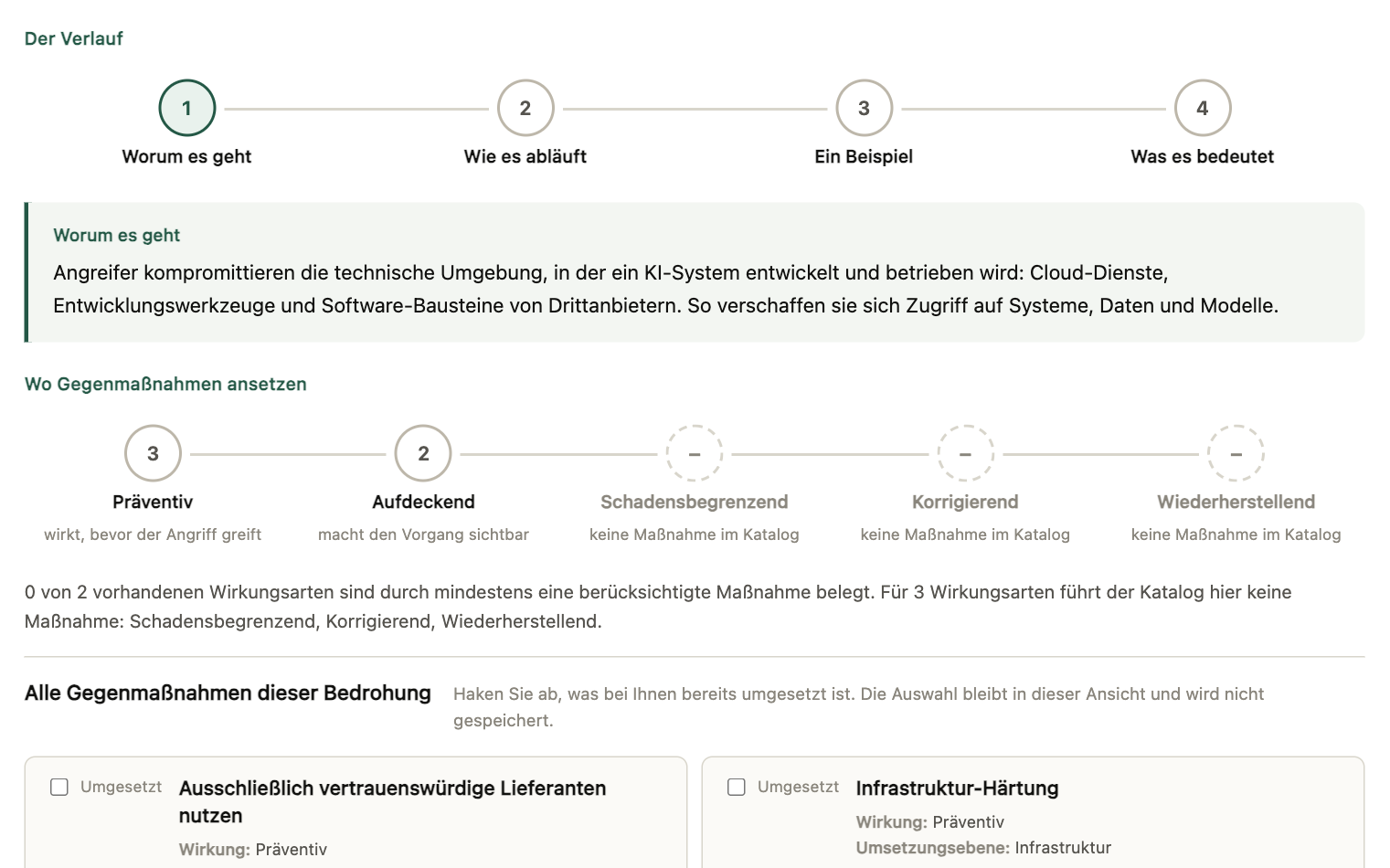
Walks through the four sections of a threat and shows below at which effect class mitigations take hold and where a gap remains.
52 threats 5 effect classes
Placing your own system
What does a rebuild trigger?
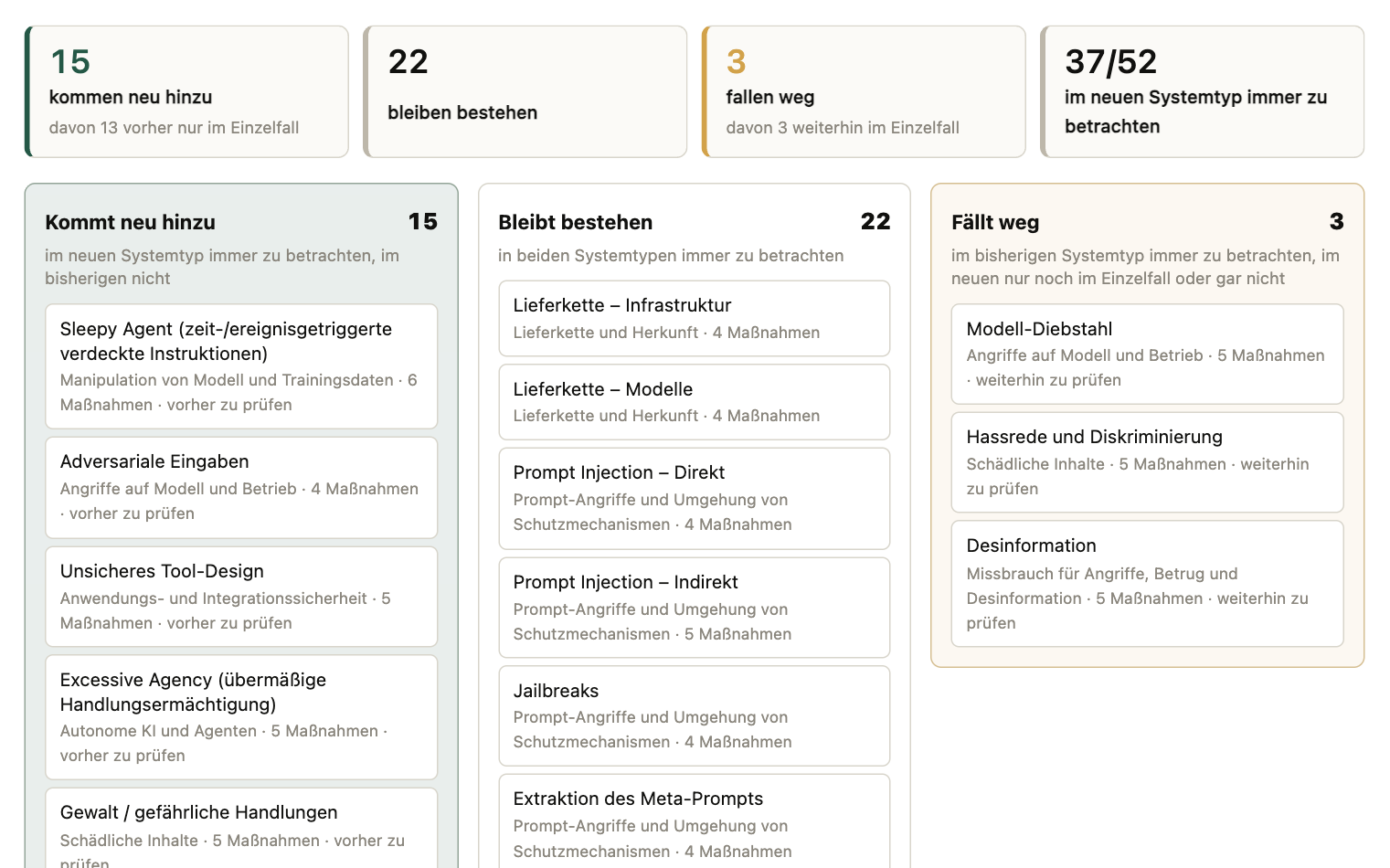
Compares two system types and shows in three columns which threats a rebuild adds, keeps or drops.
6 system types 52 threats
Placing your own system
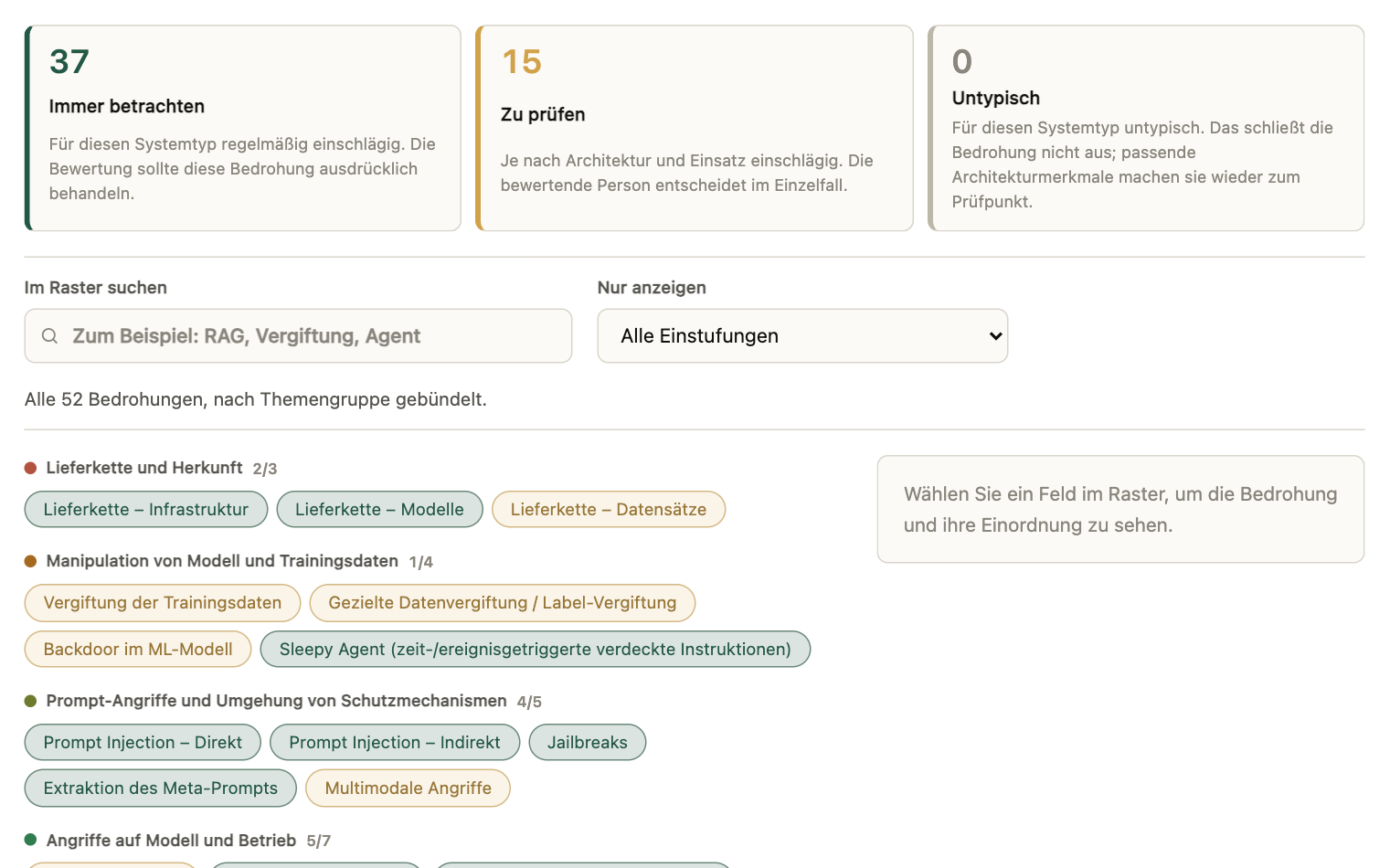
Which threats affect my system?
Shows, for a system type and its architectural characteristics, which threats are always, case by case or atypically to be considered.
6 system types 52 threats
Planning mitigations
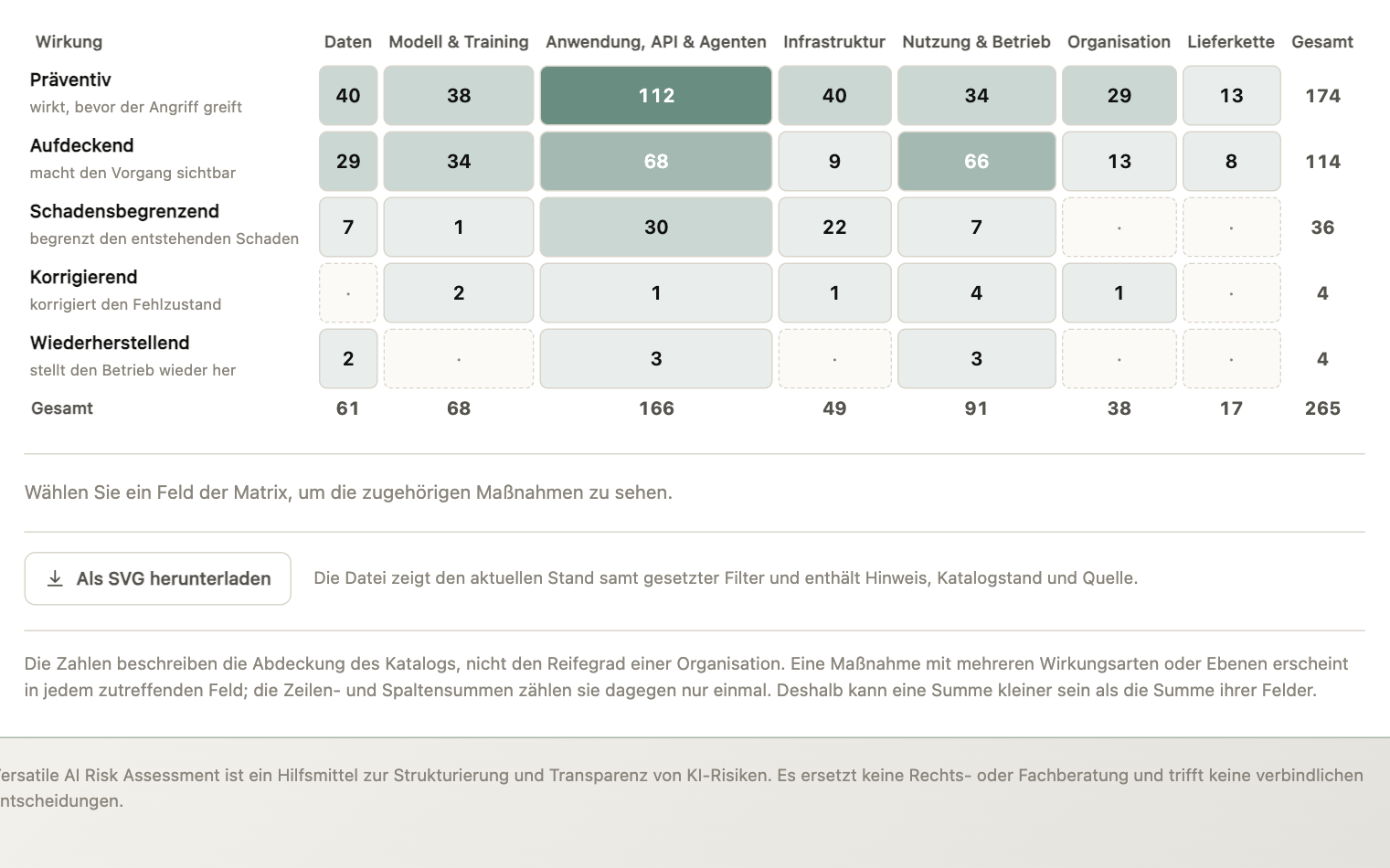
How and where do mitigations take effect?
Counts all mitigations by effect class and implementation level; dense cells show coverage, empty cells show open questions in your own organisation.
265 mitigations 5 effect classes
Planning mitigations
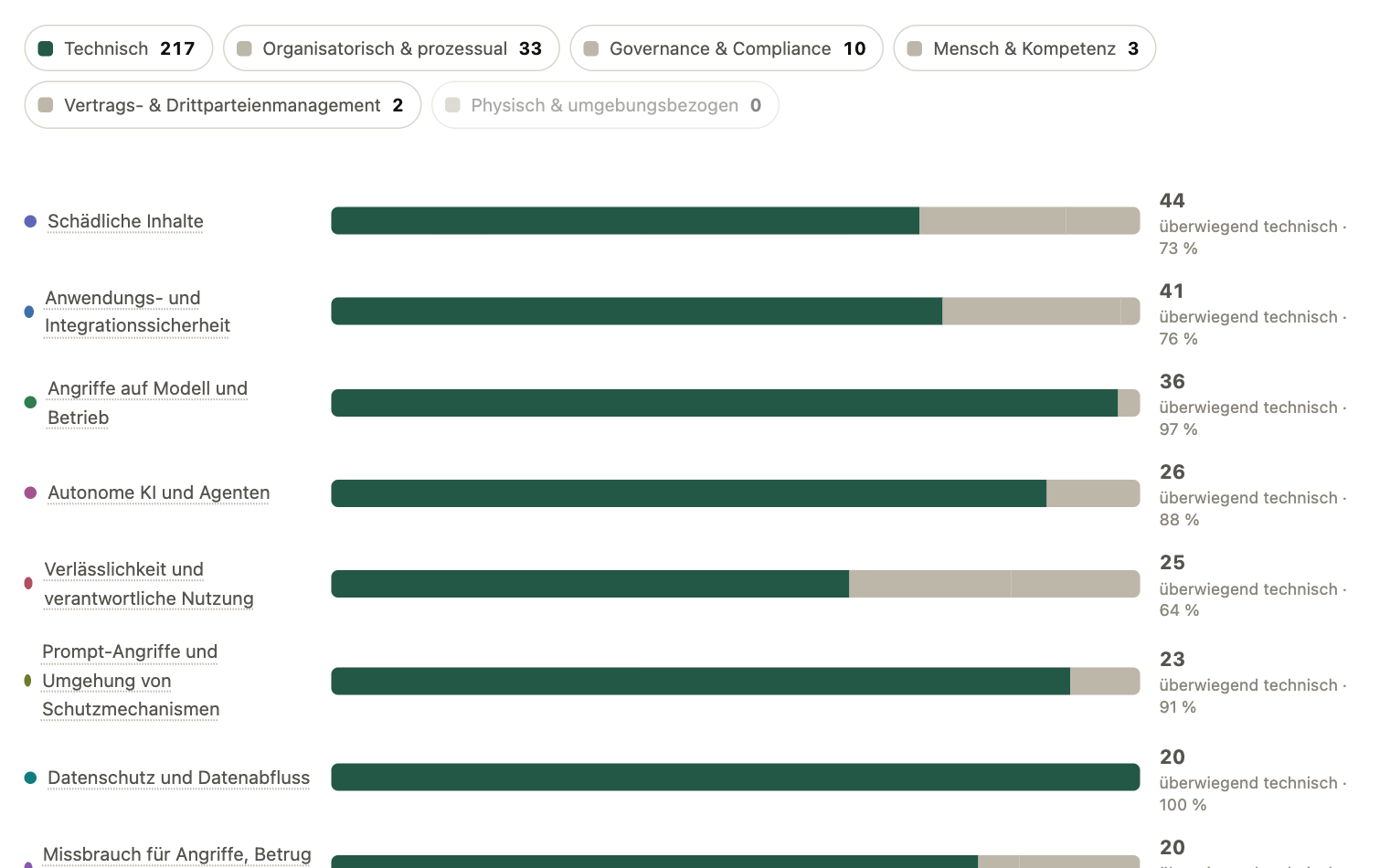
What types of mitigations are there?
Distributes the mitigations by control type and topic group; a switch counts the complementary types as well and shifts the picture.
265 mitigations 10 topic groups
Checking frameworks and evidence
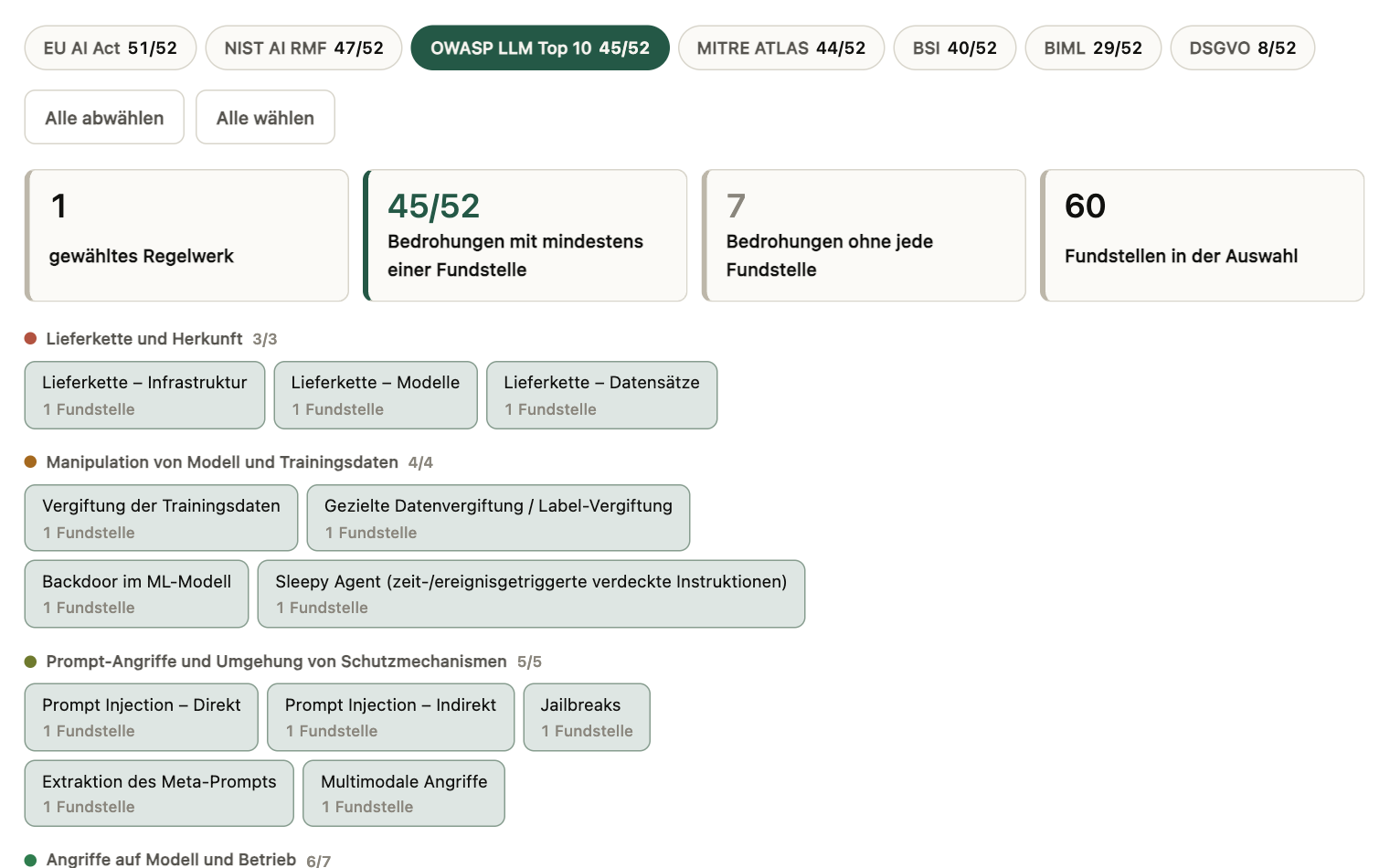
What does my framework not reach?
Shows, for one or more frameworks, which threats remain without a reference and names the frameworks that do reach them.
7 frameworks 52 threats
Checking frameworks and evidence
What is this based on?
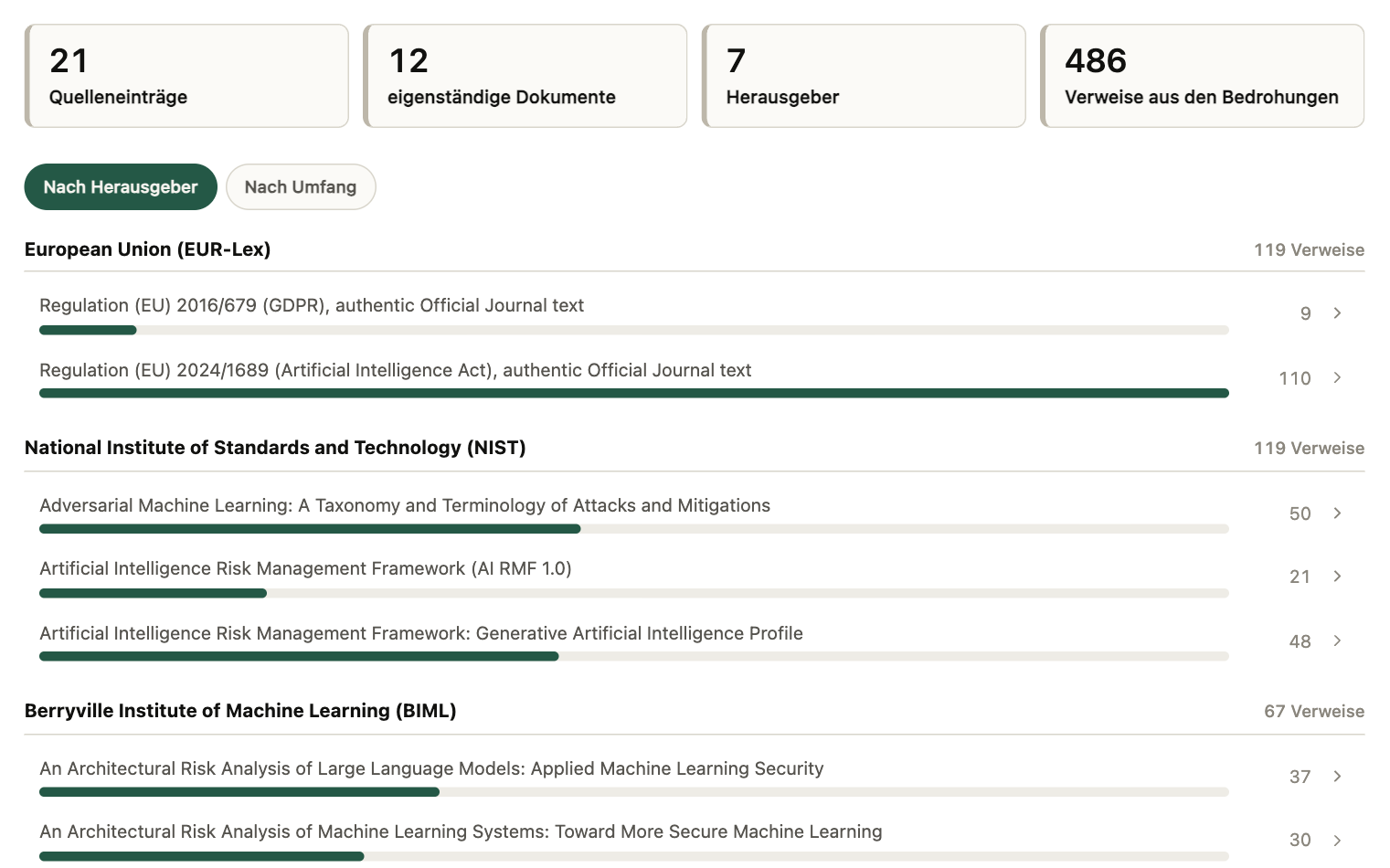
Counts the references to every primary source, grouped by publisher, with version, licence, link and the threats that refer to it.
12 source entries by publisher
Checking frameworks and evidence
Where is this anchored professionally and legally?
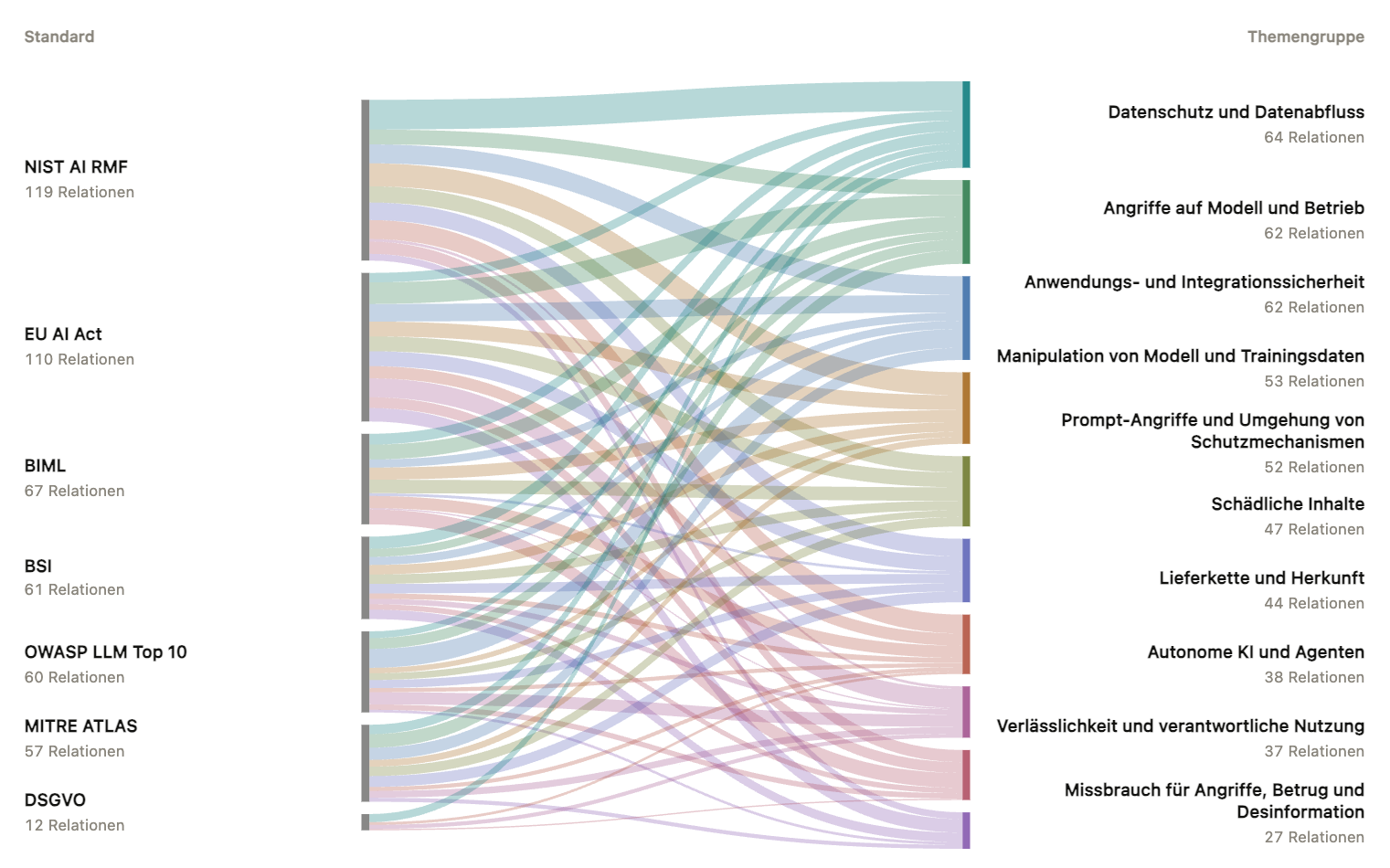
Connects seven frameworks with the ten topic groups of the catalogue; each ribbon stands for verified relations, with the applicability condition for the EU AI Act and GDPR.
512 relations 7 frameworks
Remove a filter or clear the search. The numbers in the filter column show how many entries the collection holds for each value.
The analyses show structure, distribution and applicability conditions of the verified mappings. They calculate no risk values and derive no compliance statements. Versatile AI Risk Assessment is an aid for structuring AI risks and making them transparent. It does not replace legal or professional advice and makes no binding decisions.
All 52 threats in full: description, impact, example, mitigations and verified sources.
To the catalogueSix questions along the EU AI Act and a deadline plan with the obligations that apply to your system.
To the quick checkChoose a role and a risk class and see which EU AI Act obligations apply from when, with legal reference and evidence.
To the obligations compassThe full assessment with system context, threat selection and evidence tracking, free of charge in the browser.
To the live demoVersatile AI Risk Assessment